
When you turn on an electric tankless water heater or a wall-hung electric boiler, the heart of that appliance is its heating element. Among the various options available, the cast aluminum heating element has emerged as a preferred choice for modern electric water heating appliances.
But what makes a cast aluminum heating element different? And more importantly, how is it manufactured to deliver the efficiency, durability, and reliability that global markets demand?
This article provides a comprehensive, step-by-step look at the manufacturing process of cast aluminum heating elements.
1.What Is a Cast Aluminum Heating Element?
A cast aluminum heater is a type of heating element where a heating tube is embedded inside a cast aluminum body. Unlike traditional “dry” heating elements where a metal tube is exposed directly to water, the cast aluminum heating element uses aluminum’s superior thermal conductivity to transfer heat from the embedded heating tube to the aluminum, which then heats the water flowing through surrounding water channels.
The term “cast aluminum” refers to the manufacturing method: molten aluminum is poured into a mold containing a pre-shaped heating tube and water flow channels, permanently encasing the heating element within the aluminum body.
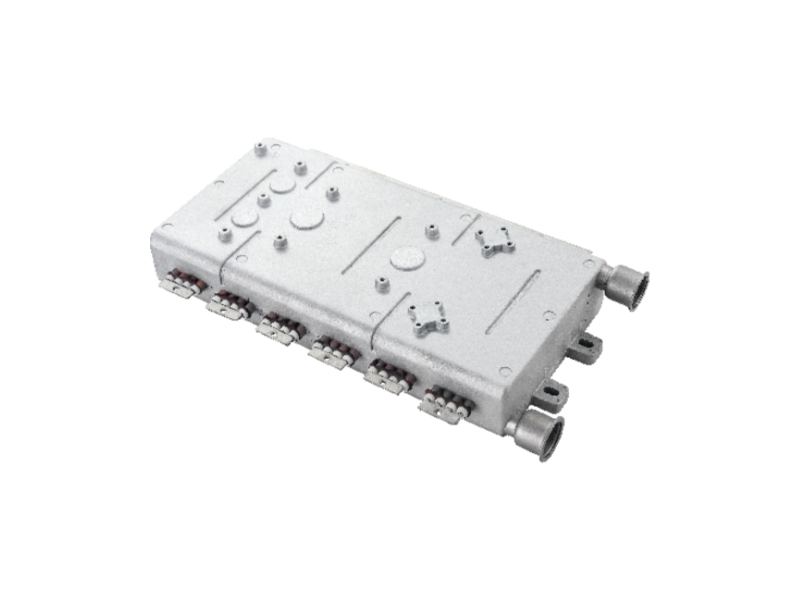
This construction creates three distinct advantages:
| Advantage | Practical Benefit |
|---|---|
| Excellent Heat Transfer | Rapid heating response and consistent temperature output |
| Uniform Temperature Distribution | Reduced surface load extends heater lifespan |
| Complete Water-Electricity Separation | Enhanced safety eliminates leakage and dry burning risks |
2.Why Choose Cast Aluminum Heating Elements?
The industry is increasingly shifting toward cast aluminum technology. According to manufacturers, cast-in heaters offer “greater reliability and longer life than other types of heating element” and are “best used in processes requiring higher heat with greater reliability.”
2.1 Superior Thermal Conductivity
Cast aluminum heaters achieve energy conversion efficiencies of up to 96% or higher. Aluminum has a thermal conductivity of approximately 237 W/mK, allowing heat to transfer quickly from the embedded heating element to the aluminum body and then to the water flow channels.
This high thermal conductivity directly translates to faster heating times and lower energy consumption — a critical selling point in markets where energy efficiency regulations are becoming increasingly stringent.
2.2 Limescale Resistance: The Anti-Scale Advantage
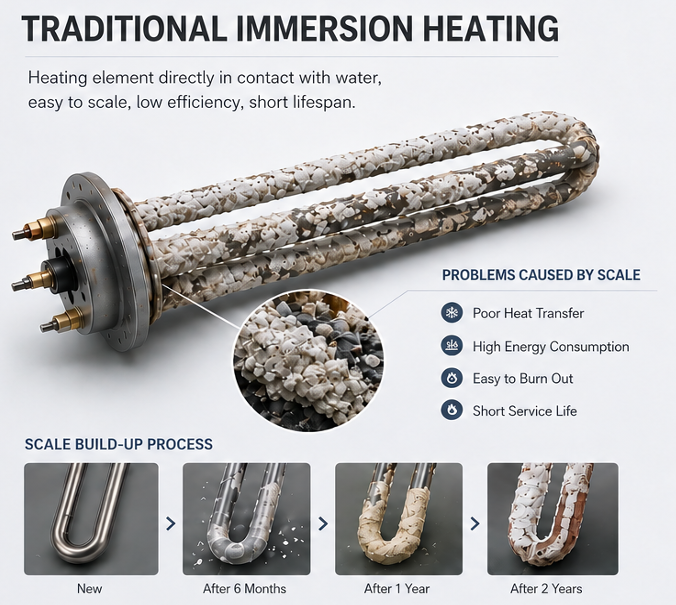
One of the most frequent complaints about traditional water heaters is scale buildup. When water contains high levels of calcium and magnesium (hard water), these minerals precipitate onto hot metal surfaces, forming a layer of scale that acts as thermal insulation.
Research shows that every 1 mm of scale can increase energy consumption by 7–12%. Scale also accelerates component failure by causing localized overheating.
Cast aluminum heating elements are fundamentally resistant to limescale formation for a specific scientific reason: aluminum’s oxide layer prevents mineral adhesion. When water temperature is maintained below approximately 45°C (113°F), scale is difficult to form even in hard water conditions. The cast aluminum heater operates at a lower surface temperature than traditional metal-sheathed elements, naturally suppressing the conditions that cause scale formation.
As one manufacturer notes, cast aluminum heating elements offer “long lifespan, anti-limescale and high efficiency,” requiring minimal maintenance even in hard water areas.
2.3 Extended Service Life
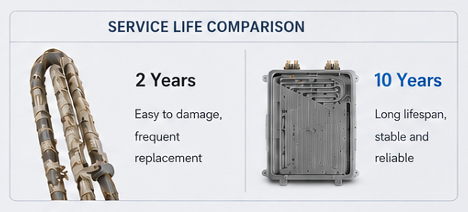
The robust construction of cast aluminum heaters directly contributes to their longevity. Typical cast aluminum heating elements are rated for 50,000 hours or more of continuous operation under normal use — equivalent to over 17 years of daily 8-hour usage.
This durability comes from two design features: first, the aluminum body protects the embedded heating tube from direct contact with water and mechanical stress; second, the uniform temperature distribution reduces thermal stress on individual components, preventing premature failure.
3.The 8-Step Manufacturing Process
Manufacturing a high-quality cast aluminum heater requires precision, quality control, and deep material science knowledge. Below is a detailed breakdown of the process.
Step 1: Design and Specification
Every cast aluminum heater begins with a detailed design phase. Engineers determine critical parameters based on the intended application (instant water heater or electric boiler):
- Power rating (typically 5500W – 27000W for residential applications, higher for commercial use)
- Physical dimensions and shape to fit specific appliance housings
- Heating channel configuration
- Water flow channel configuration
- Temperature control requirements
- Mounting interface specifications
Computer-aided design software is used to create 3D models of the heating element, ensuring that all performance requirements can be met before production begins.
Step 2: Material Selection — The Foundation of Quality
Not all aluminum alloys perform equally. High-quality cast aluminum heaters require specific aluminum alloys with the following properties:
| Property | Why It Matters |
|---|---|
| High fluidity | Molten aluminum must flow evenly throughout the mold without forming air pockets |
| Excellent thermal conductivity | Directly impacts heating efficiency and speed |
| Corrosion resistance | Water contact over years requires material stability |
| Good casting characteristics | Prevents porosity, shrinkage, and other casting defects |
Manufacturers typically use specialized aluminum alloys with high fluidity characteristics, which “avoids the formation of air pockets and a finishing without roughness” in the final product.
The heating element itself consists of:
- A nickel-chromium resistance heating wire
- A steel outer sheath
- High-purity magnesium oxide (MgO) powder for electrical insulation and heat conduction
The MgO powder serves a dual purpose: it electrically insulates the heating wire from the steel sheath while simultaneously conducting heat outward to the aluminum casting.
Step 3: Heating Tube Preparation
Before casting can occur, the heating tube must be precisely shaped. This process includes:
- Inserting the heating wire: The resistance wire is placed inside the steel tube and centered to maintain uniform wall thickness.
- Filling with MgO: High-purity magnesium oxide powder is compacted around the heating wire to ensure optimal heat transfer and electrical isolation.
- Swaging: The tube is compressed through a series of dies to compact the MgO powder to maximum density.
- Bending and forming: The heating tube is bent into the required shape — sometimes coiled or looped — to fit within the mold cavity.
The final shape of the heating tube is critical because it determines the heat distribution pattern within the aluminum body.
Step 4: Water Flow Channel Preparation
In a cast aluminum heater, the water flow channels are separate pipes (typically stainless steel or copper) through which water flows to absorb heat. These channels must be shaped to fit inside the mold alongside the heating tube. To ensure that the channel’s inner diameter remains unobstructed and water flow rate is not reduced, a sand-filling process is applied before bending:
- Filling with sand: The pipe is tightly packed with fine sand, which supports the inner wall and prevents collapse or flattening during bending.
- Bending: The sand-filled pipe is bent into the designed shape (e.g., serpentine, U-shaped, or coiled) according to the mold cavity layout.
- Removing sand: After bending, the sand is completely emptied from the pipe, leaving a smooth, uniform water passage.
Water channel integration: For water heater applications, independent water flow channels are integrated around or through the heating tube body, surrounding it in a three-dimensional arrangement.
Step 5: Mold Preparation
A mold is created based on the design specifications, typically machined from steel or other durable alloys. The mold must be designed to:
- Guide molten aluminum to fill all cavities completely
- Allow the pre-shaped heating tube to be suspended in the correct position
- Withstand repeated exposure to molten aluminum temperatures (approximately 660–750°C / 1220–1380°F)
- Produce parts with consistent dimensions from one casting to the next
For production-scale manufacturing, permanent molds (also called dies) are used rather than expendable sand molds. These metal molds allow for faster cycle times and more precise dimensional control.
Step 6: Casting — Embedding the Heating Element
This is the most technically demanding step. The pre-shaped heating tube is placed into the mold cavity. Then, aluminum ingots are melted in a furnace and brought to the correct casting temperature. Once the molten aluminum reaches the proper temperature and fluidity, it is poured — or for precision applications, injected under controlled pressure — into the mold, surrounding the heating tube.
The goal is to completely encase the heating tube within the solidifying aluminum, creating a monolithic structure with no voids or gaps.
Three primary casting methods are used:
| Casting Method | Description | Best For |
|---|---|---|
| Sand Casting | Molten aluminum poured into sand mold | Low-volume production, prototype runs |
| Die Casting | Aluminum injected into steel die under high pressure | High-volume production, tight tolerances |
| Permanent Mold Casting | Gravity pouring into reusable metal mold | Medium volume, consistent quality |
For high-volume water heater manufacturing, die casting or permanent mold casting is preferred because they produce consistent part quality at high speed.
Step 7: Cooling and Solidification
After the molten aluminum is poured into the mold, the casting is allowed to cool and solidify. This step may involve controlled cooling rates to prevent defects such as:
- Porosity (small air pockets trapped in the metal)
- Shrinkage cavities (voids formed as metal contracts during cooling)
- Warping or distortion from uneven cooling
- Internal stress buildup that could cause cracking under thermal cycling
Controlled cooling is essential because the heating tube and aluminum expand and contract at different rates. Proper cooling management ensures the bond between the heating tube and aluminum remains perfect throughout the heater’s lifetime.
Step 8: Machining, Finishing, and Assembly
Once the casting has solidified and cooled, the raw casting undergoes several finishing operations:
- Trimming: Excess aluminum (flash) is removed from parting lines where mold halves met.
- Machining: Mounting surfaces, threaded holes, and precise interfaces are machined to final dimensions.
- Surface treatment: The aluminum surface may be treated to enhance corrosion resistance or improve appearance.
- Junction box installation: A weather-resistant junction box is installed at the termination point of the heating tube to provide safe electrical connections.
The final assembly includes:
- Temperature sensors (thermistors or thermocouples) for precise thermal regulation
- Dry-burning protection sensors to shut down the heater if water flow stops
- Over-temperature safety cutoffs
- Terminal connections for external wiring
One manufacturer describes the complete system as “an integrated heating system combining waterways, core plane heating, constant temperature control heat dissipation device, anti-dry burning protection device, and waterproof scale design system” — effectively creating a “3DMAX Integrated Extreme Heating System.”
4.Performance Characteristics of Cast Aluminum Heating Elements
After manufacturing, each cast aluminum heating element must meet specific performance benchmarks. Based on industry specifications, here are typical parameters for high-quality cast aluminum heating elements:
| Parameter | Typical Specification |
|---|---|
| Heating speed | 2–4 seconds to reach operating temperature |
| Energy efficiency | ≥96% |
| Operating temperature range | 80°C – 150°C (176°F – 302°F) |
| Power range | 1500W – 6000W (customizable) |
| Waterproof rating | IPX7 (submersible protection) |
| Service life | ≥50,000 hours |
| Corrosion resistance | Excellent (aluminum oxide layer) |
| Limescale resistance | Superior (operates below scale formation threshold) |
The combination of rapid heating, high efficiency, and long service life makes cast aluminum heaters suitable for diverse applications beyond residential water heating, including:
- Commercial instant water heaters (restaurants, hotels, cafés)
- Medical sterilization equipment
- Laboratory constant-temperature water devices
- Industrial beverage boilers
- Solar water heater auxiliary heating modules
- Smart home hot water systems
5.Quality Control at Every Stage
Manufacturing a reliable cast aluminum heater requires rigorous quality control throughout the production process. A standard quality control program should include the following inspection points.
5.1 Incoming Material Inspection
- Raw aluminum alloy chemical composition verification
- Heating tube dimensional accuracy and electrical continuity
- MgO powder purity and moisture content
- Terminal components and safety devices
5.2 In-Process Inspections
- Heating tube positioning verification before casting
- Mold temperature and condition monitoring
- Casting temperature and pressure logging
- Visual inspection for surface defects
Example: IQC for a 12kW Heating Element
For incoming quality control (IQC) of a 12kW cast aluminum heating element, the following tests must be performed:
- Appearance and structure test: Conforms to processing drawing requirements
- Power test: Power rating within +5% / -10%
- Dielectric withstand voltage test: 1800V / 3 seconds, no breakdown
- Water pressure test: 1.2 MPa for 1 minute, no leakage
- Water flow test: At 0.5 MPa, flow rate ≥ 12 L/min
- Temperature rise test: Complete assembly test — the surface temperature of the heating element must not exceed 85°C
- Dry heating test: After the thermal cut-out trips, the heating element must show no deformation, bursting, or localized overheating, and must pass the withstand voltage test again to be considered qualified.
5.3 Final Testing
Every finished cast aluminum heater should undergo:
| Test | What It Checks |
|---|---|
| Dimensional inspection | Conformance to design specifications |
| Dielectric strength test | Electrical isolation between heating circuit and water path |
| Insulation resistance test | MgO integrity and moisture exclusion |
| Ground continuity test | Proper electrical grounding |
| Power output test | Wattage delivered at rated voltage |
| Thermal cycling test | Performance after repeated heating/cooling cycles |
Some advanced manufacturers also employ non-destructive testing (NDT) methods such as digital X-ray radiography to detect internal porosity or voids that might compromise performance or safety.
6. The Future of Cast Aluminum Heating Element Technology
The cast aluminum heating element is not a static technology. Ongoing developments are pushing the boundaries of what these heaters can achieve:
6.1 Smart Integration
Modern cast aluminum heaters are being integrated with IoT temperature control modules and PID (Proportional-Integral-Derivative) control algorithms, allowing for precise temperature regulation and remote monitoring via smartphone applications.
6.2 Material Advancements
Research continues into specialized aluminum alloys that offer even better thermal performance, corrosion resistance, or castability. Some manufacturers are exploring the use of aluminum-silicon alloys and aluminum-rare earth alloys to achieve specific performance characteristics.
6.3 Manufacturing Process Improvements
Advanced process control systems — including automated temperature monitoring, pressure-controlled injection, and real-time quality analytics — are making cast aluminum heaters more consistent and less expensive to produce at scale.
6.4 Sustainability
Aluminum is one of the most recyclable industrial metals, and cast aluminum heaters can be recycled at end of life. This aligns with growing circular economy requirements in European markets, where regulations increasingly mandate material recovery and reduced environmental impact.
Conclusion
The cast aluminum heating element represents a mature yet evolving technology that has become the industry standard for modern electric water heating appliances. From initial design through material selection, heating tube preparation, water flow channel fabrication, precision casting, and rigorous quality control, every step of the manufacturing process contributes to a heating element that delivers:
- High heat transfer efficiency (≥96%)
- Exceptional limescale resistance (low surface temperatures and smooth surfaces)
- Extended service life (50,000+ hours)
- Complete water-electricity separation (enhanced safety)
- Uniform temperature distribution (reduced thermal stress)
Understanding how these critical components are made helps distributors, contractors, and procurement professionals make informed sourcing decisions. When a cast aluminum heater is properly engineered and manufactured, it becomes the foundation of a water heating product that will perform reliably for years — even in demanding conditions.
For technical specifications, detailed design parameters of heating elements, or to discuss a custom heating solution, contact our engineering team.